

Blog

Tips for Hiring a Great Contractor

Tips for Hiring a Great Contractor Choosing a contractor to handle a home repair or renovation project is a major decision. Home renovations are major projects; the sort of thing homeowners often spend a while saving up enough money to be able to afford. The last thing you want to do is make the mistake of hiring someone who won’t do the job right.

Home renovations can be stressful even in the best of circumstances and hiring the wrong contractor can only make things worse. Here are a few helpful hints to help you find a good home contractor and hopefully avoid some headaches and frustration.

Do Your Research

You can always check online to see if there are any reviews for a contractor, but one of the best ways to find a good contractor is by asking your friends, family, neighbors, or coworkers for recommendations. If they’ve had a similar project done at their home in the past, they’ll probably be happy to give you the name of the person they hired. Better yet, they might be able to show you the work that person did so you’ll be able to examine their work up close.

Depending on the experience your friends have had with their contractors, they might also be able to recommend people to avoid, which can be just as valuable to know as it is to know who the good contractors are.

Be Inquisitive

When you’re interviewing potential contractors, don’t be afraid to ask questions. Ask about things like how many similar jobs they’ve handled in the past year, if they’re licensed and insured, how long they’ve been in business, if they can provide references, how many other projects they have going on right now, if they use subcontractors, and if a job requires a permit. No reputable contractor will be bothered by answering these sorts of questions.

It’s particularly important to know if a contractor is licensed and and insured. Contractors should carry insurance coverage for personal liability, property damage, and worker’s compensation. If a contractor doesn’t have insurance and something goes wrong with the job, such as a subcontractor is injured on the job or your property or a neighbor’s property is damaged, you could be on the hook for the damage. If you want to verify that a contractor is currently licensed, contact your local consumer protection agency or building department.

If a contractor works with subcontractors, be sure to ask if they’re also licensed and how long the contractor has worked with them.

Be Clear About Your Needs

Are there any particular constraints that come along with your job? Do you absolutely need a project completed by a certain date? Do you only want contractors to work during certain hours? If so, make sure you make this clear to a contractor before hiring them. Details like these could make a big difference in whether or not a contractor is a good match for you. A contractor might have other jobs to finish before starting yours, which would be a problem if you need a project completed right away. Only being able to have a contractor work during certain hours might not be a big issue if you’re dealing with a small project, but it could mean a larger project could take longer to complete.

Be Skeptical of Low Estimates

There are lots of times in life where you can go with a less expensive option and everything will be fine. Trying to find a contractor is not one of those times. If you ask for several estimates and you get one that is considerably lower than the others, there might be a very good reason for that. A person charging an exceptionally low amount for a job could be inexperienced, unlicensed, lack proper insurance, use subpar materials, or cut corners in some other way. It’s easy to get excited about a low price, but in many cases, going with the lowest bidder for a home improvement job can end up costing a lot more in the long run.

Find Out What You’ll Have to Do

Before a contractor starts to work on your home, there might be some things you’ll have to do first. For example, many contractors will not move furniture or other items out of a room because they don’t want to be liable if something is damaged. You may also have to make sure your pet is kept in an area where it will be safe and out of the way. Asking about these things ahead of time will help ensure your job gets off to a smooth start.

Get it in Writing

Once you’ve found a contractor you like and want to hire, make sure you have a written contract. The FTC has a great list of things any good contract should have when working with a contractor. So many business arrangements run into problems because there’s confusion about what’s expected of them and a clear contract prevents that from happening. Even if you hire a contractor who happens to be someone you know, you still need a contract.


Top 5 Features Buyers Want in New Homes

Top 5 Features Buyers Want in New Homes If you ask five different people which features they think a perfect home should have, you will probably get five different answers. What is and isn’t a perfect home will largely vary from person to person. But in spite of that, there are always trends in which features homebuyers are looking for in a new home. Here are just a few of the top things homebuyers are currently looking for:

Energy Efficiency

Energy efficiency is one of the top things people are looking for in homes right now. More people are looking for ways to be more environmentally friendly and nobody really wants to spend more money than necessary on things like electricity or heating and cooling bills. A home that is well insulated, has been updated with new vinyl windows, and/or comes with Energy Star certified appliances is bound to be very attractive to potential homebuyers. In a 2013 survey conducted by the National Association of Homebuilders, 36% of respondents said Energy Star appliances were a “must have” and 58% said they were “desirable,” while energy efficient windows were called “desirable” by 54% of respondents.

Eat-In Kitchens

While formal dining rooms may have been popular for years, it’s now more popular for a kitchen to have room for a table right in the kitchen. Many home buyers with young kids want their home to have a cozy place for the whole family to get together for a meal. If given a choice between having a home with a formal dining room or a home with an extra room that could be used for a home office, many home buyers would rather have the space for a home office.

Walk-In Pantries

Ample storage space never seems to go out of style. Spacious walk-in closets in bedrooms are always a hit with homebuyers, but right now, buyers seem to love the idea of having a walk-in pantry. Between food, small kitchen appliances, pots and pans, and plates and utensils, kitchens require a lot of storage space and walk-in pantries are an excellent way to keep all of those things organized.

Hardwood Floors

For a long time, carpet was seen as being more desirable than hardwood floors since it helps to keep heating bills down. But despite the trend toward homes being more energy efficient in many ways, hardwood floors have become extremely popular in recent years. Not only can hardwood flooring look more inviting than carpet, it can often be easier to maintain than carpet, which will require frequent vacuuming or shampooing.

Laundry Room

We all need to do laundry and having a dedicated laundry room makes that chore a lot easier. Separate laundry rooms not only keep washers out of sight and should also have room for a space to fold laundry and to hang clothes to dry as necessary.

If you’re thinking of putting your home on the market in the near future, you might want to consider adding some of these features to your home first. Many of these things can be accomplished pretty easily, such replacing your windows, flooring, or appliances, and can make your home much more appealing to house hunters.

Choosing the Right Fabric to Make Your Own Curtains

Choosing the Right Fabric to Make Your Own Curtains If you’ve recently switched out your old windows with nice, new vinyl replacement windows, or if you’re thinking of getting new windows soon, you might also want to consider getting some new curtains. New windows can help improve the look of a room and having new window coverings to go with them can make a room look even nicer.

Of course, you can always buy new curtains, but if you like being able to make things yourself, you might want to try sewing your own curtains. Curtains can be a relatively simple sewing project, so even if you just have some basic sewing skills, you might be able to make some curtains yourself. But sewing the curtains is only half of the challenge. First, you’ll have to choose the right fabric.

When you walk into a fabric store, you’ll be faced with so many fabric options it can be hard to know where to begin. It’s important to remember that not all fabrics are created equally, so you can’t just choose the fabric that looks the nicest.

To get started, ask a store employee to point you in the direction of the decorator fabrics. Decorator fabrics tend to have higher thread counts than the types of fabrics you’d use for quilting or making clothes. Because of their higher thread count, decorator fabrics are heavier and more durable than other types of fabrics, so they’re ideal for a project like making curtains. But there are still more questions to consider when choosing the right fabric.

Are you looking for curtains that provide more coverage or let more light in? If you want to allow for the most light, you’ll want a sheer fabric, but remember that many sheer fabrics are more delicate and can be more difficult to work with than other types of fabric. If you want lots of coverage, velvet has long been a popular fabric choice for curtains. If you want to help keep a room as warm as possible, a heavier fabric will not only help keep light out, they can help keep rooms warmer, too.

Since curtains get exposed to a lot of direct sunlight, you might want to consider lining your curtains. When fabric is exposed to a lot of direct sunlight, the colors and patterns can fade over time, so lining the side of the curtain that faces the window pane can help prevent that from happening. You can line your curtains with a simple white cotton fabric, or you can use a different type of material to get extra benefits out of your curtains. If your curtains are going to be used in a bedroom, you might want to consider lining the curtains with a blackout material to prevent light from seeping in. You could also line your curtains with an insulated material if you’re trying to maximize your energy efficiency.

If you’re unsure whether or not a particular fabric would work well for a curtain, you can always ask a store employee.  Fabric store employees are very often fans of sewing themselves and could be able to help make some recommendations.

Getting Organized With Pegboard

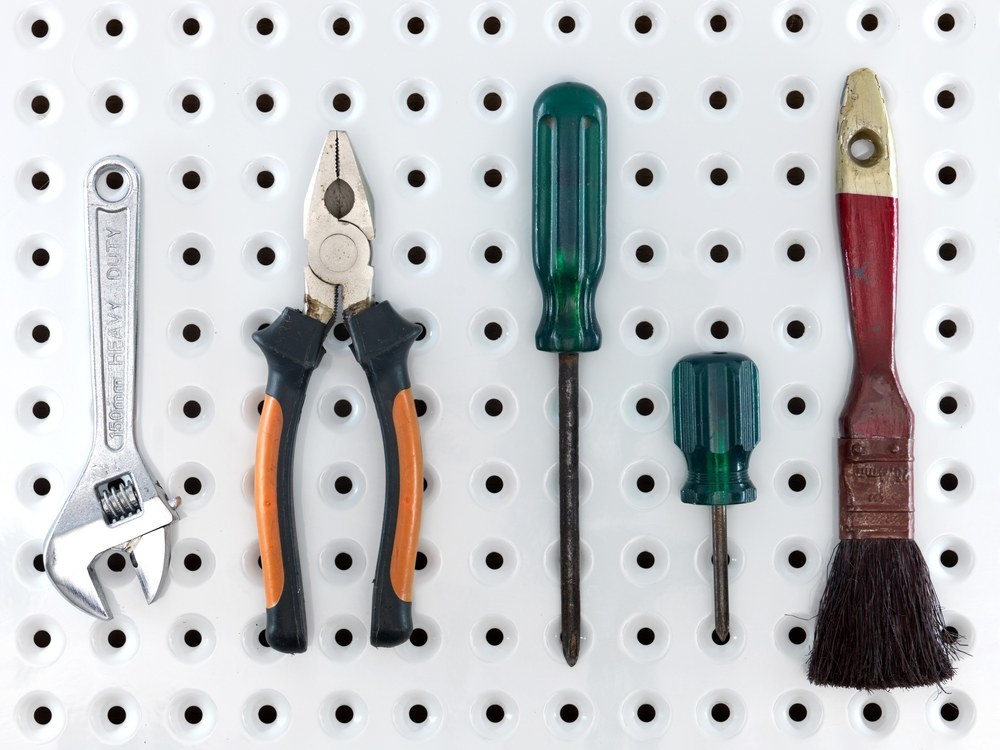
Getting Organized With Pegboard When it comes to getting your home organized, there are tons of tools available to help make that happen. Shelving, cabinets, and storage bins are all great ways to help get everything in order, but one tool you might not want to overlook is pegboard.

Pegboard is awesomely versatile. You can use pegboard to cover an entire wall of a room or just a small area. It can be used in just about any room of the house and it’s easy to grab some paint and make it match your decor. You can use it to store all sorts of things and it’s easy to arrange things on it any way you’d like. And best of all, pegboard is fairly inexpensive and can easily be found at stores like Home Depot or Lowe’s. Once you have some pegboard, all you need are some pegs, hooks, or baskets that attach with hooks and you’ve got an instant storage solution.

Want to try using pegboard in your home? Here are a few ideas to help you get started!

Home Workspaces

Whether you’re organizing a home office, a craft room, or a work area in the basement or garage, pegboard is a very popular tool to help stay organized. Since baskets and hooks work perfectly with pegboard, you have endless opportunities to keep all of your tools and other necessities organized and easy to access when you need them.

Bedrooms

Need some extra storage space in a bedroom, but don’t have room next to the bed for a nightstand? Why not paint the pegboard and turn it into a faux headboard? That way, you’ll have an easy way to use hooks, baskets, and floating shelves to create extra storage space above your bed. Here’s a very popular example of how this can be done.

Entryways

When people come inside, the first thing they want to do is take off their coat or jacket and put their things down. You can always use pegboard to create a place to hang coats, scarves, purses, and keys instead of using a typical coat rack or wall hooks.

Kitchens

If you have a lot of large pots and pans, you know how hard it can be to keep them all organized in a cupboard. Many people like to use pegboards to create a wall-mounted pot rack so all of those pots and pans will be out of the way, freeing up space in cupboards and making the pots and pans easier to access. Or if you have other kitchen utensils you use frequently, you can always hang those from your pegboard, too, so they’ll always be easy to grab whenever you need them.

Organizing Cupboards

Since pegboard can easily be cut down to fit different sizes, it can be a great way to line the inside of a cupboard door or along the back or sides of the inside of the cupboard. This way, you can use hooks to hang things on and keep the inside of the cupboard a little more organized.

Jewelry and Accessory Storage

Jewelry and sunglasses can both be kind of awkward to store. If you have a lot of long necklaces, pegboard is perfect for keeping all of them organized and preventing them from getting all tangled up. Or if you have a collection of sunglasses, you can always use hooks or pegs to create an excellent place to store all of your stylish shades.

These are just a few of the ways you might want to consider using pegboard. Since it’s so versatile, there are endless possibilities for how it can be used. Use your imagination and you might be surprised by how many ideas you could come up with to use it.

When You Should DIY and When You Should Hire a Pro for Home Improvements

Home Improvements When to DIY and When to Hire a Pro If you spend enough time watching home improvement shows on TV, it’s easy to find lots of design inspiration and get ideas for projects you’d love to do around your house. But home improvement shows can also make some projects seem easier to accomplish than they really are. While there are many home repair and improvement projects the average person can absolutely handle themselves, there are many projects where it’s best to call a professional. Handling home improvement and repair projects yourself can save you a lot of money, but sometimes, a professional is well worth the money.

Before trying to do a project yourself, ask yourself these questions to figure out if you might be better off calling a professional.

How Dangerous is the Project?

There are a lot of ways you could get hurt working on a project at home. Many people end up taking trips to the emergency room after falling off a tall ladder or because they didn’t use a power tool properly. Professionals are not only trained in how to use things like these as safely as possible, they should have insurance to cover them if they do end up being injured on the job. Generally, if a project is cosmetic and doesn’t require any major tools, you’re probably safe to do it yourself. For example, if you want to paint a room in your house where the highest areas could easily be reached with a stepladder, it’s probably fine to handle it yourself. But painting the exterior of a home or a room with very tall ceilings are better jobs for professionals.  

Could This Project Damage Your Home?

There are many projects that could cause serious damage to your home if it’s not handled correctly. Knocking down walls could potentially alter your home’s structural integrity and could result in even more problems if you run into electrical wiring or pipes you didn’t know were in there. In most cases, projects involving plumbing or electrical wiring should be left to professionals if it’s any more complicated than unclogging a drain or replacing a light switch or faucet. Plumbing projects can cause very expensive water damage if not done correctly and an improper electrical wiring job can pose a fire hazard and can be very dangerous for the person doing the job. Also, anything involving a gas line should be handled by a professional.

Does the Project Require Permits?

A good rule of thumb for deciding whether or not to hire a professional is whether or not a job requires building permits from the city. Unless you happen to be a professional carpenter or contractor, projects that require permits are generally too complicated to do as a DIY project and should be left to the pros.

How Complicated is the Job?

Now, this is where many homeowners get themselves into trouble. A project that might seem simple and straightforward on the surface can easily turn out to be more complicated than it initially seemed. If you’re unsure about whether or not you should hire a professional, get estimates from a few contractors and see if they mention any aspects to the project you didn’t anticipate. It’s also possible a job could require special tools or knowledge, in which case hiring a pro is the way to go. For example, most people don’t install replacement windows on their own.

How Large is the Project?

In many cases, people are only able to work on their home DIY projects on weekends or during evenings after work. If the project you’re thinking of starting is pretty large scale, such as replacing the flooring throughout your entire house, a professional would be able to get the job finished much sooner than you would be able to if you only worked on it in your spare time.