


Blog

Smart Things to Do Before Putting Your Home on the Market

 Smart Things to Do Before Putting Your Home on the Market Your home may have seemed absolutely perfect when you first bought it, but after living in it for a while, maybe it’s no longer quite what you need. It’s served you well over the years, but now it’s time for you to move on to another home. You’ve decided to put your house on the market and between looking for a new place to live and dealing with selling your home, it can be a very stressful time. Before you call the real estate agent about publishing that listing, taking some of these steps could make the process a little bit easier for you:

Schedule a Pre-Sale Inspection

While it’s really easy to look around your house and find things you could do to spruce it up a bit -- give walls a fresh coat of paint, replace old windows with new vinyl replacement windows, switch out dated-looking light fixtures with new ones -- many issues might not be so obvious. Having a pre-sale home inspection is a great way to find some of the more hidden issues that are lurking in your house that could make a potential homebuyer reconsider when they have their own inspection done. After all, a lot of the most important things in your home like electrical wiring and plumbing systems are all largely hidden behind walls so small problems with them often go unnoticed until they turn into big problems.

If a pre-sale inspection uncovers problems and you fix them right away, you’re going to be in great shape once your house hits the market. Just think of how happy a person thinking of buying your home is going to be when they have an inspection done and no major issues are found!

Find Your Warranties

What things around your house have warranties? Don’t worry about the warranties on things like your computer or your food processer, think of the things that will stay with your home when you sell it like your air conditioner, furnace, water heater, and your roof. If any of these things are still covered by warranties, it would be helpful to have proof of that ready to show.

Get Estimates

If there’s something around your house that needs to be repaired or replaced, go ahead and get an estimate for how much that would cost. Even if you aren’t going to make the repair or replacement yourself, just having the estimate on hand could be very helpful when negotiating prices for your home. Many potential homebuyers tend to see an issue and overestimate how much it would cost to fix it. So if you have a homebuyer who sees something they don’t like and says, “Oh, it’s going to cost at least $7,000 to fix that,” your real estate agent can easily show them proof of how much it would really cost.

Rent a Storage Unit

One thing many homebuyers struggle with when getting their homes ready to sell is de-personalizing their homes for showings. When a potential homebuyer takes a tour of a home they’re interested in, they want to get an idea of what it would look like if they lived there. It’s hard to do that when a home is full of extremely personal touches like family photos and mementos from various events of your life.

It can be hard to see your home suddenly not looking like your home, but putting those things away, at least during showings, will make a better impression on homebuyers. Actually, renting a storage unit is a good move in general. Too much clutter can also be a big turn-off for potential homebuyers so if you have extra furniture that isn’t used very often, closets jam-packed with clothes and other items, or have a lot of other random clutter around the house, go ahead and put some of it in storage for a while.

Taking Care of Vinyl Siding

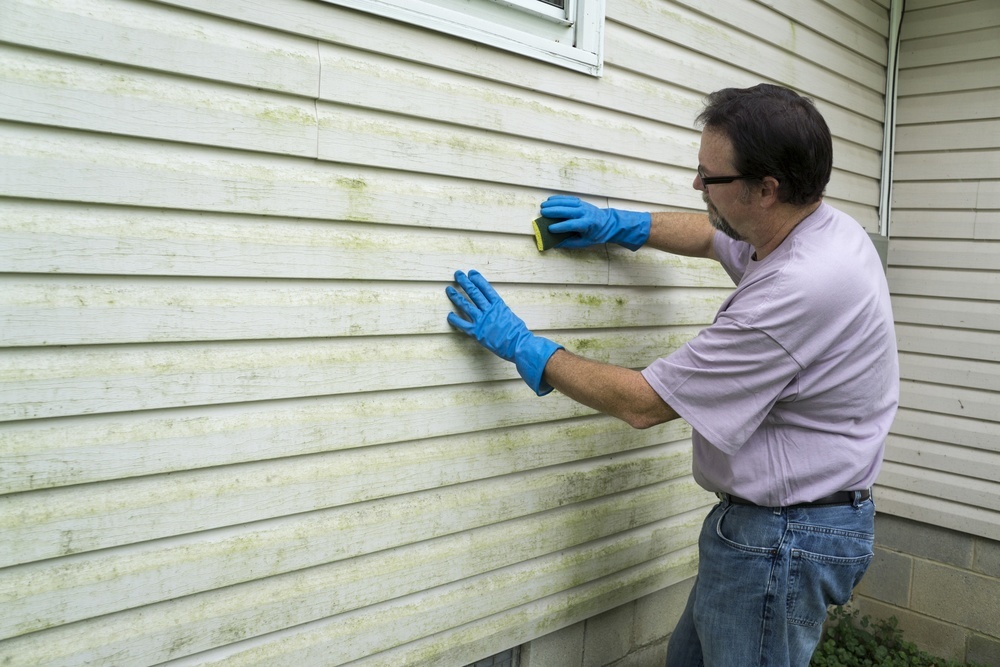
Taking Care of Vinyl Siding If you had a chance to choose the type of siding that is currently on your home and you chose vinyl siding, we can probably guess why you made that choice: it doesn’t need much maintenance. While it’s true that vinyl siding doesn’t need a lot of maintenance, don’t think this means vinyl siding is maintenance-free. After all, vinyl siding is exposed to the elements all day long, every single day of the year, through rain, snow, hail, and heat. Vinyl siding may be durable, but those kinds of elements can still take a toll.

Vinyl siding can get dirty and stained or even have problems with mildew or mold. Yes, it’s true -- vinyl siding isn’t necessarily immune to mold and mildew. But these types of problems can easily be prevented or dealt with by washing your home’s siding once a year. In addition to detracting from the way your home looks, dirt, mold, and mildew can shorten the lifespan of your vinyl siding so regularly cleaning it can help make your siding last as long as possible.

If you don’t have a pressure washer, don’t worry: you can do a very effective job of cleaning your home’s siding without one. In fact, pressure washers can potentially damage your home’s siding if not used correctly. All you really need is a soft-bristle brush with a long handle, a sponge, a bucket of water, some liquid dish soap, and a garden hose, but there lots of different mixtures you can use to clean with. Bob Vila recommends using a mixture of 70% water and 30% white vinegar to clean with.

If you have more difficult spots to remove, a mixture of water, dish soap, and oxygen bleach could do the trick. Just be sure to use oxygen bleach, not chlorine bleach. Oxygen bleach won’t discolor the siding or damage any plants that are growing near the house.

Do not use things like nail polish remover/acetone, furniture polish, undiluted chlorine bleach, or extremely abrasive cleaning tools like steel wool. These will damage your home’s siding.

Before you get started, make sure you turn off the power to any outdoor electrical outlets and light fixtures that are attached to your house and cover them with plastic. Walk around the area where you’ll be working and make sure you have a clear space to work. When you’re ready to start washing, start at the bottom and work your way up, using your hose to rinse as you go. Although vinyl siding isn’t completely maintenance-free, the upside is that at least vinyl siding tends to come clean pretty easily. This chore might take an afternoon to handle, but taking the time to do it is very worthwhile.

Using Your Home’s Equity to Finance Home Improvements

Using Your Home’s Equity to Finance  Home Improvements Home improvement projects come in lots of different types, different sizes, and different prices. While there are lots of ways you can improve your home without breaking the bank, many major home renovations and home improvement projects are the type of thing you have to save up to be able to afford. Depending on the type of project you’re looking into, waiting to save up the money for the project could take years.

Whether you’re looking to build an addition to your home, renovate a kitchen, or replace all the windows in your home with new vinyl replacement windows, one option to help finance your home improvements is to use some of your home’s equity. Tapping into your home’s equity can be risky and it’s certainly not a decision to take lightly, but if you’re going to use your home’s equity to finance anything, home improvements and renovations are some of the best reasons to do so. Since many home renovations and improvements add value to your home, you’d be using your home equity to build more equity.

If you’re considering using home equity to fund a renovation, there are two main ways you can go about it: a home equity loan and a home equity line of credit (HELOC). People often think these are the same thing, but they are quite different. A home equity loan is often referred to as a second mortgage and it works very much like any other type of loan -- you’re given a lump and you repay it by making payments on it on it on a monthly basis with a fixed interest rate. HELOCs are a revolving line of credit and work more similarly to how a credit card works. With a HELOC, you’re approved to borrow a certain amount of money and you can access some or all of that amount anytime you need it. You only pay interest on it when you actually use it and when you pay off an amount you owe, you’re back to having the full original amount of your line of credit available again.

Since HELOCs are typically good for several years at a time and you only pay interest on them when you actually use them, they tend to be best if you’re working on a series of projects around the house. But if you’re looking to do one big project, a home equity loan would make more sense.

Just be aware that both options do have their drawbacks. If you’re thinking of using a home equity loan or HELOC to fund a home improvement project, it’s very important to speak to someone at your bank about how you’re planning to spend the money. They’ll help you figure out the best option for you and will fully explain all the advantages and disadvantages of the option you’re considering.

Preventing Flooding and Moisture in Your Basement

Preventing Flooding and Moisture in Your Basement One of the biggest problems homeowners dread dealing with is flooding or moisture in the basement, but it’s a very common problem homeowners face during the springtime as snow and ice begins to melt and rain becomes more common again. Even a small amount of water getting into a basement can cause large amounts of damage that’s often expensive to fix. If you start seeing signs of moisture or flooding in your basement, it’s very important to deal with it right away.

Before you start taking steps to prevent water from getting into your basement, the first thing you need to do is figure out exactly where the moisture is coming from. There are several common ways to go about addressing damp basements, ranging from simply opening a window to having your basement walls waterproofed from the outside of your home. Which method is best for you largely depends on where the water is coming from.

Water can get into basements through condensation, groundwater swelling, and water runoff. A good way to figure where the water is coming from is by taping a section of aluminum foil or plastic wrap to a wall in the basement close to where you think water could be coming in and leave it there for at least 24 hours. If condensation forms on the side of the foil or plastic wrap that faces away from the wall, it means the problem is humidity in your basement. But if you see condensation on the side of the foil/plastic wrap on the side that was directly against the wall, the water is coming in from the outside of your home.

You might also want to check around your basement’s windows to see if water could be leaking in from there. If that’s the case, you might be able to solve it by re-sealing your windows or if your windows are very old or damaged, new vinyl replacement windows might be a better option.

If humidity is a problem in your basement, this is a relatively easy thing to fix. Simply getting a room dehumidifier for your basement or opening your basement windows regularly to allow air to circulate better could do the trick. These are much easier and less expensive than other basement waterproofing methods and will more effectively address the root cause of the problem.

When humidity isn’t the source of your problem, you might have problems with water runoff. Go outside and take a look around the perimeter of your home, checking to make sure the ground doesn’t slope in a way that directs water toward your home and that the downspouts from your gutters are effectively directing water away from your home. Make sure your gutters are clear and, if necessary, install extensions on your downspouts to direct water further away from your home. If the ground slopes down toward your home, talk to a landscape architect about having your yard regraded to prevent water from being directed toward your home.

Once you’ve eliminated problems on the outside of the house, go back inside and look for cracks in your basement walls. If you see small cracks in the walls, those can be patched up quite easily by using hydraulic cement and painting the walls with a waterproofing paint or concrete sealer. If you have larger cracks to deal with, call a professional to take care of them for you.

After it rains, does it feel like the water tends to stick around for a while? If so, excessive groundwater could be your problem. Since this would be an ongoing problem, call a professional to see what waterproofing method they recommend. Exterior waterproofing is the most expensive, but the most effective, option and involves excavating around your house and installing a waterproof material so that water won’t get into your home. They might also recommend an interior drainage system to manage water as it comes into your home so it doesn’t cause damage.

Spring Cleaning Made Easy

Spring Cleaning Made Easy Spring is finally here! Even a mild winter can still feel like it lasts forever when you’ve got a bad case of cabin fever. With a new season beginning, it can be nice to give your home a fresh start. Spring cleaning is an annual tradition for many people, but it doesn’t have to be a daunting task. Here are a few helpful hints to make some of the biggest spring cleaning chores a little bit easier.

Windows

Now that spring has arrived, you’ll want to have your curtains open more often to let in some of that sunshine you’ve been missing for the past few months. When that time comes, you don’t want to be stuck looking at dirty windows, so springtime is a good time to wash your windows inside and out.

Try to wash your windows on an overcast day since heat from the sun can cause your cleaning solution to dry on the window and leave a streaky finish behind. Whether you’re working on the inside or outside of your window, one of the best things you can do is start by rinsing the window off or wiping it down to get rid of large pieces of dirt so they won’t get dragged around your window as you wash them. Be sure to use a squeegee or a lint-free cloth to get the best finish and be careful not to use too much cleaning solution.

Don’t forget your blinds or curtains! It’s also a good time of year to clean those up, too. The best way to go about this purely depends on what your window treatments are made of. Some types of curtains might be able to just be put in the washing machine, but some types of materials might need to be hand washed, steam cleaned, or brought to a dry cleaner. Vacuum cleaner attachments can be very helpful in keeping both blinds and curtains clean since they can allow you to get rid of larger pieces of dust without having to take anything down.

While you’re spending so much time around your windows, give each of them a good inspection to make sure everything is still in good condition. Replace your weatherstripping if it’s looking worn and patch up sealing that’s looking thin. If you’ve been thinking of replacing your windows with new vinyl replacement windows, it’s a great time of year to have that done!

Floors

Even if you’re good about vacuuming on a regular basis, you might want to consider having your carpeting deep cleaned a couple of times per year. You can hire someone to do this for you, or you can rent a carpet cleaning machine at your local hardware store. Area rugs should be taken outside and shaken out and beaten.

If you have wood or laminate flooring, remember that vacuuming is still an extremely effective way of cleaning your floors. A soft microfiber mop is another one of the best ways tools you can have to keep your wood or laminate floors clean. Using liquid cleaners on your floors should be avoided unless absolutely necessary, but if you ever need to do it, be extremely careful not to use too much cleaner on the floor. Don’t apply liquid cleaners directly to the floor and if possible, use cleaning products made by your flooring’s manufacturer.

Closets

Getting your closets in order is one of the most important parts of spring cleaning. After all, if your closets are completely packed with stuff, it can be hard to get the rest of your home organized, too. If you’ve got a cluttered closet, try separating your things into three piles: things you definitely want to keep, things you can definitely get rid of, and things you’re not sure if you should keep. Since it shouldn’t take much time to figure out which things should definitely stay and which things should definitely go, you’ll only have to focus on the things you’re unsure about.
Having a tough time narrowing those things down or is your “keep” pile too big? Try getting some advice from a friend. Since your friend won’t have any kind of sentimental attachment to your things, they might be able to help you thin out your belongings.